Grabah Handwritten Font for Crafters & Sellers
If you've ever spent hours tweaking letter spacing on a wedding welcome sign—only to realize the script looks stiff or overly ornate—you’ll instantly feel the quiet magic of Grabah. This isn’t just another decorative script font. It’s a elegant yet friendly handwritten typeface that breathes warmth into physical products without sacrificing clarity or commercial practicality. As someone who designs printable planners, cuts vinyl labels for small-batch candles, and creates digital SVG bundles for Etsy, I’ve tested dozens of script fonts—and Grabah stands out because it works where it matters most: on product tags, printed invitations, cut-out stickers, and mockups customers actually buy.
Why Grabah Feels Like a Craft Tool, Not Just a Font
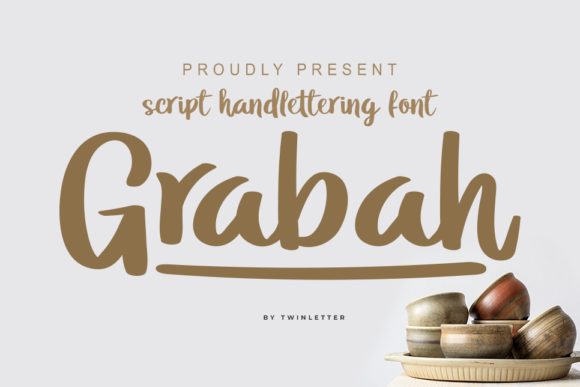
Grabah balances personality with precision. Its strokes have gentle contrast—thick downstrokes, soft thin upstrokes—but avoid the exaggerated flourishes that trip up cutting machines or vanish at small sizes. The curves are open and inviting, never cramped. That “friendly” quality in its description? It shows up in real ways: when you use Grabah for a boutique clothing tag, customers don’t just read the brand name—they feel the care behind it. When you set a short phrase like “Hand-Poured” on a soy wax candle label, Grabah adds artisanal credibility without looking fussy or dated.
Where Grabah Shines in Physical & Digital Craft Projects
- Wedding stationery: Use Grabah for names on save-the-dates, monogrammed napkin wraps, and acrylic welcome signs—it’s legible at 24pt on matte cardstock and holds up beautifully in foil-stamped prints.
- Product labels & tags: Works cleanly at 10–14pt on kraft paper stickers or woven fabric tags. I’ve used it for herbal tea sachets and ceramic mug stamps—no lost details, no jagged edges after Cricut cut.
- Digital printables: Planner covers, habit trackers, and printable wall art benefit from Grabah’s natural rhythm. Unlike ultra-thin scripts, it prints crisply even on home inkjets.
- Seasonal & boutique packaging: Try “Gather & Glow” in Grabah on holiday gift box wraps, or “Small Batch • Made With Love” on apothecary-style soap labels.
- Social media graphics & mockups: Grabah adds authenticity to Instagram story banners or Canva templates—especially when layered over textured backgrounds or hand-drawn elements.
Readability Tips You’ll Actually Use
Grabah is designed as a display font, not body text—and that’s a strength, not a limitation. For best results:
- Keep it to headlines, names, short phrases (under 5 words), and decorative accents—not paragraphs or ingredient lists.
- On small stickers or jar labels under 1 inch wide, stick to uppercase or title case with generous letter spacing. Avoid tight kerning—Grabah’s charm lives in its airiness.
- For Silhouette or Cricut users: test-cut at 16pt first. The clean entry/exit points of each glyph reduce weeding time significantly compared to tangled swash-heavy scripts.
- In mockups, pair Grabah with a subtle shadow or soft stroke to enhance legibility on busy photos—especially for Etsy listing thumbnails.
Smart Pairings That Elevate Your Brand
Grabah thrives alongside thoughtful contrast. As a Script Amp font, it’s built to complement—not compete—with supporting typefaces. My go-to pairings:
- With a warm sans serif (like Montserrat Light or Poppins Regular): perfect for price tags, care instructions, or product descriptions next to a Grabah headline.
- With a low-contrast serif (think Lora or Merriweather): ideal for wedding programs or boutique stationery where elegance needs grounding.
- Avoid pairing Grabah with other high-contrast scripts or ultra-bold display fonts—its friendly tone gets lost in the noise.
Licensing, Formats & Real-World Fit
Grabah comes in standard OTF and TTF formats—fully compatible with Cricut Design Space, Silhouette Studio, Adobe Creative Cloud, and Canva. While the product description highlights its elegant and friendly style, what matters most for sellers is this: Grabah includes basic OpenType features—standard ligatures and alternate characters that let you swap in more natural-looking “&” or “ff” combinations. No multilingual glyphs listed, so keep it focused on English-language products unless you verify extended support.
Most importantly: Grabah includes a commercial license. That means you can use it to create and sell physical goods (stickers, mugs, tote bags), digital downloads (printables, SVG files, Canva templates), client branding projects, and even resale-ready design assets—as long as you’re not redistributing the font file itself. No need to track usage caps or pay per sale. It’s the kind of licensing that respects how makers actually work.
When Grabah Makes the Difference Between “Nice” and “Noticed”
I once redesigned a client’s line of lavender-scented bath salts using Grabah for the front label and a neutral sans for ingredients. Before: polite, forgettable. After: customers started tagging the brand in Instagram posts—not because of the scent, but because the typography felt intentional, human, and quietly luxurious. That’s the power of a well-chosen script font. Grabah doesn’t shout. It invites. It reassures. And in a crowded handmade market, that subtle emotional resonance often closes the sale.
Whether you're printing 50 wedding menus or uploading your 100th Etsy printable, Grabah delivers consistent charm without compromise. It’s the kind of premium font that earns its place in your core design toolkit—not as decoration, but as a quiet partner in building something people want to hold, share, and remember.